
There is nothing you need to become.
"The only person you can ever truly be is yourself."
Jon Kabat-Zinn
And yet, many parts of us learned to survive without ever feeling truly met.
From November 27 to 29, we open a space to return to that place, with care, structure and presence.
What this workshop is
A guided, structured and embodied journey into reparenting. Not as an idea, but as something you experience directly.
Reparenting is the capacity to build an inner relationship that is steady, responsive and attuned. You learn to recognise your needs as they arise and respond without urgency, without judgement, and without abandoning yourself. You also learn to stay in relationship with others without losing that inner ground.
Turning toward your own vulnerability this way isn't dramatic, but it is essential. Healing doesn't come from removing parts of ourselves. It comes from learning how to include them.
As this unfolds, the mind begins to settle, and a quieter, clearer, more stable way of seeing and being emerges.
What this is not
This is not about fixing yourself or analysing your past. It's about learning to stay with yourself in a different way, and becoming the parent you needed.
Day 1: Needs and Self-Compassion
Understand what was missing and how it still lives in the body. Learn to tell pain apart from the layers we build around it. Meet self-compassion as a grounded, embodied response.
Day 2: Protectors
Explore the parts of us that learned to manage, suppress or avoid pain: proactive patterns (control, over-functioning, self-criticism) and reactive ones (withdrawal, avoidance, distraction). These parts aren't the problem. They are adaptations.
Day 3: Inner Self and Integration
Reconnect with a stable inner presence marked by clarity, calm and compassion. Begin relating to younger parts of yourself from that grounded place, and bring the experience into daily life.
What's included
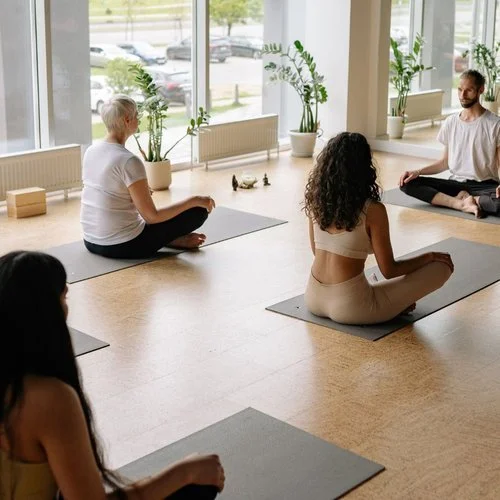
Guided meditation, beginner-friendly
Embodied awareness and nervous system regulation
Gentle yoga and movement
Reflective writing and structured journaling
Inner dialogue and parts-based exploration
Relational exercises in pairs or small groups
Shared meals and space for integration