
Ayurvedic Spring Pho Recipe
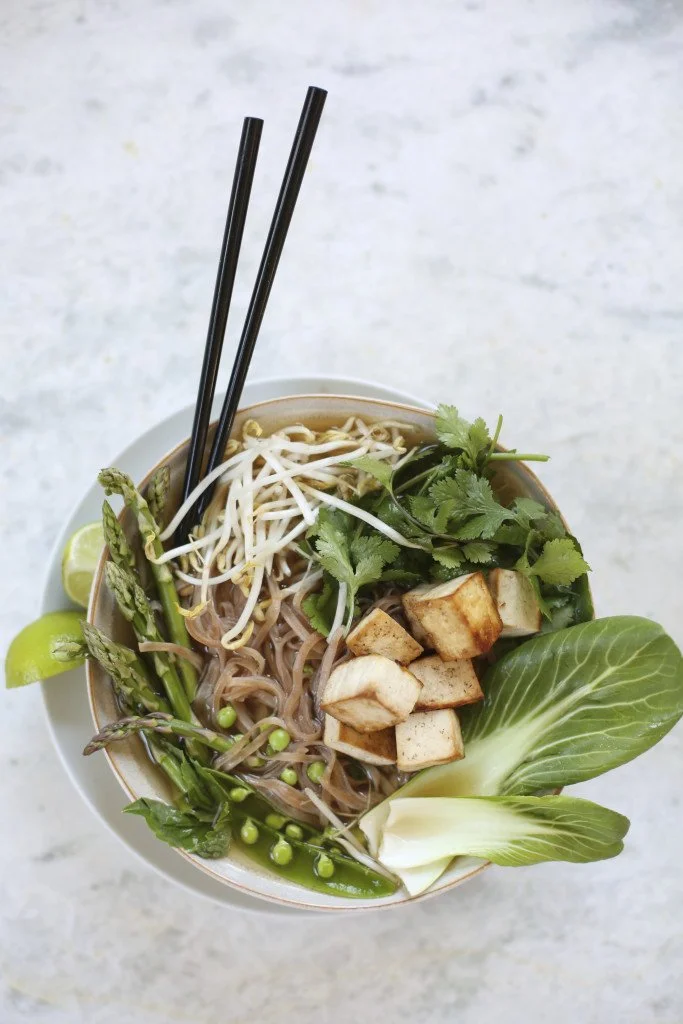
Spring Pho: A Light, Spiced Broth to Balance Kapha and Pitta
An Ayurvedic Spring Pho is the ultimate remedy for mid-to-late spring. In Ayurveda, this period transitions from Kapha season (wet, heavy, congested) into early Pitta season (warm, sharp).
Classical Vietnamese pho relies on a heavily spiced, warming, and clear broth which aligns perfectly with the Ayurvedic mandate to favor light, dry, bitter, and astringent foods that clear out seasonal mucus and sluggishness.
By swapping out heavy rice noodles for lighter options and loading up on bitter spring greens, you get a deeply balancing, detoxifying meal.
The Agni-Stoking Broth
8 cups pure water or light vegetable broth
1 large red onion or 3 shallots, halved
3-inch piece of fresh ginger, sliced lengthwise
Spices (Dry Roasted): 2 star anise, 2 small cinnamon sticks, 1 tsp coriander seeds, ½ tsp whole cloves, ½ tsp black peppercorns
1 tbsp Tamari or coconut aminos (low sodium)
1 tsp Ghee or mustard oil (use sparingly to keep it Kapha-pacifying)
The Spring Base (Choose One)
Buckwheat noodles (Soba) or Brown rice noodles (Used in moderation, as they are lighter and drier than standard white rice noodles).
Detox Option: Daikon radish spirals or kelp noodles for an ultra-light, moisture-clearing alternative.
Mid-to-Late Spring Veggie Toppings
1 cup Asparagus, thinly sliced diagonally (Astringent and highly seasonal)
1 cup Shiitake mushrooms, sliced (Imparts a grounding, savory taste without heaviness)
1 head Baby bok choy or chopped dandelion greens (Bitter and excellent for liver support)
The Pacifying Garnishes
Fresh herbs: Plentiful Thai basil, mint, and cilantro (Mint and cilantro soothe late-spring Pitta)
1 Fresh lime, cut into wedges (Squeezed at the very end to stimulate salivary enzymes)
2 Scallions, thinly sliced
Method
Char the Aromatics: Heat your dry pot over medium-high. Place the halved onion and ginger cut-side down. Let them char for 4–5 minutes until darkened. This process adds a smoky depth without relying on heavy oils.
Toast the Spices: Add the star anise, cinnamon, coriander seeds, cloves, and peppercorns directly to the dry pot with the onions and ginger. Toast for 1–2 minutes until intensely fragrant, watching closely so they do not burn.
Simmer the Broth: Pour in the water or vegetable broth. Add the tamari. Bring to a boil, then reduce the heat to low, cover slightly, and simmer for 45 to 60 minutes to extract the medicinal qualities of the spices.
Prep the Elements: While the broth simmers, cook your choice of noodles separately and drain. In a separate pan, flash-sauté the shiitake mushrooms and asparagus in your single teaspoon of ghee or mustard oil just until tender.
Strain and Finish: Strain the hot broth through a fine mesh sieve, discarding the spent solids. Return the clear broth to the pot, toss in the bok choy or dandelion greens, and let them wilt for 2 minutes.
Assemble: Divide your noodles (or veggie spirals) into bowls. Arrange the sautéed mushrooms and asparagus on top. Ladle the boiling, spiced broth and wilted greens over the top. Garnish generously with the fresh basil, mint, cilantro, and scallions. Serve hot with a fresh squeeze of lime juice